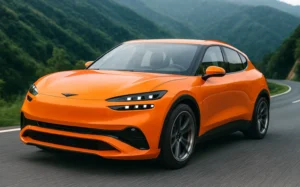

Renault has taken the wraps off the Kwid EV abroad as the Kwid E‑Tech in Brazil, essentially the same hardware as the refreshed Dacia Spring underneath. Test cars in India are a green light for intent, but official timelines remain fluid—and the smart bet is on 2026 over an immediate launch. (NDTV Auto)
Background
The formula is straightforward and familiar: a compact body, closed grille with a split‑light signature, and a cabin that finally feels modern in this bracket. The global spec centers on a 26.8 kWh battery and a motor tune up to 65 hp, with mixed‑cycle range claims generally in the low‑to‑mid‑200 km ballpark depending on region and test cycle. DC fast‑charging support is part of the package abroad, with 10–80% top‑ups in roughly 40–45 minutes on a 30 kW charger. (DriveSpark)
Main feature
- Overseas unveil: E‑Tech branding, a tidier face, bumper‑mounted headlamps, and Y‑style tail‑light elements align with the latest Spring facelift cues. (CarWale)
- Core specs: 26.8 kWh battery, 45–65 hp motor options, 0–50 km/h in around 4.1 seconds on the stronger tune, and a claimed range near 220–265 km depending on certification.
- Cabin tech: 10.1‑inch touchscreen with wireless Android Auto/Apple CarPlay, a 7‑inch digital cluster, USB‑C ports, and expected safety like multiple airbags, ESC, TPMS, and a rear camera; some markets quote Level 1 ADAS. India features will vary by trim. (Autocar India)
- India status: Local testing is ongoing, but seasoned watchers peg the market launch around 2026 to nail pricing, localisation, and positioning against Tata Tiago EV, MG Comet EV, and Citroën eC3. (Financial Express)
Expert view
This looks like Renault timing the entry for maximum value: prove the package abroad, tune costs, and arrive when the price‑feature equation lands just right for Indian buyers. If the 26.8 kWh pack, 65 hp motor, and true DC fast‑charge make it to India at an aggressive sticker, it could set a fresh benchmark for city‑first EVs.
India launch: what’s realistic?
- Timelines: Late 2025 is optimistic; early‑to‑mid 2026 is more realistic given testing cadence and supplier ramp‑ups.
- Localisation and trims: Expect market‑specific tweaks to range, charging hardware, and features to meet cost and safety targets.
- Segment positioning: Squarely in the entry‑EV lane—daily commuting, quick top‑ups, low running costs, and a tech pack that feels current.
Conclusion
The Kwid EV is finally official overseas and looks dialed for urban India—light, efficient, and feature‑forward. Patience is key: a 2026 debut with the right spec and price could make it the default budget EV choice for city buyers.
Last Updated on October 18, 2025 by Lucy